

The Bible
How to Study the Bible at Home

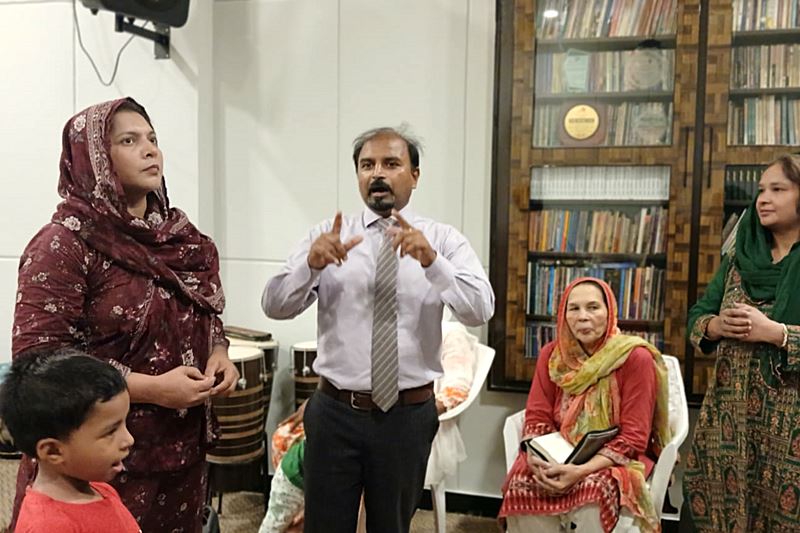
Have you ever opened the Bible, read a page, closed it, and thought "I didn't understand any of that"? You're in very ordinary company.
Here's what I've learned after years of sitting with women who were handed a Bible and left to work it out alone: the problem is almost never intelligence. It's that nobody ever showed them a method. So in this guide I'll show you how to study the Bible at home using four questions, twenty minutes, and a notebook. That's all you need.
Before you start: choose the right book
Please don't begin at Genesis and try to read straight through. Many sincere people have given up in Leviticus and quietly concluded the fault was theirs. It wasn't.
Pick one short book and stay in it until you reach the end. Read ten to fifteen verses at a time, in order.
| If you want | Start with | Length |
|---|---|---|
| The life of Jesus, fast | Mark | 16 chapters |
| Something gentler and reflective | John | 21 chapters |
| Practical instruction | Philippians | 4 chapters |
| Honest prayers for hard days | Psalms | Dip in anywhere |
| Everyday wisdom | Proverbs | One chapter a day |
The method: four questions
This is old, it isn't clever, and it works. Ask these four questions in order, every time.
1. What does it say?
Read the passage twice, slowly. The second time, read it aloud if you can. Then, without looking, say back what happened or what was argued.
Can't do it? Read it again. This step sounds trivial, and it's the one people skip most. That's exactly why so much "Bible study" turns into a group sharing opinions.
2. What did it mean to the people who first heard it?
Who's speaking? To whom? What's just happened? A letter written to a frightened church reads very differently once you know the church was frightened.
Most study Bibles have a short introduction to each book. Those few paragraphs are worth far more than they look. If you'd like a free overview of any book, BibleProject's book summaries are clear and short.
3. What does this show me about God?
Not first about yourself. Every passage is saying something about His character, His promises or His intentions. Name it in one sentence before you move on.
4. What does it ask of me?
Now get specific. Not "I should be kinder," but "I'll speak to my sister tomorrow and apologise."
A general resolution changes nothing by Friday. A specific one can be obeyed or disobeyed, which is rather the point.
Write it down, in four lines
Keep a notebook. Write one short line for each question. It takes three minutes and it changes everything, for two reasons.
First, you think more clearly with a pen in your hand. Second, in six months you can look back and see what God has been saying to you repeatedly. That's usually the thing you've been avoiding.
How to study the Bible at home: a weekly plan
Twenty minutes on most days will take you further in a year than two hours once a month.
- Five days: one passage, the four questions, four lines in the notebook.
- One day: read back the week's notes. Anything repeating?
- One day: rest, or read a Psalm slowly with no questions at all.
Attach it to something that already happens in your day. After the morning tea. Before you sleep. A habit with no anchor usually drifts, and that's the single most common reason people who meant to study the Bible at home quietly stop.
What if you can't read easily?
You're not shut out of this. Audio Bibles exist in Urdu and many regional languages, and the four questions work just as well when a passage is heard rather than read. Listen twice, then say it back in your own words.
When you get stuck
Here's the honest part of learning how to study the Bible at home: you'll reach passages you can't make sense of. Everyone does, including people who've studied for decades. I still do.
Mark the verse, write your question beside it, and carry on. Don't let one difficult verse stop the whole habit.
Then find someone to ask. This is a large part of what we do: sitting with women and working through the passage they got stuck on. There's no question so basic it isn't worth asking. In my experience the people who ask the basic questions out loud end up understanding the most.
Frequently asked questions
How long should I study the Bible each day?
Twenty minutes is plenty, and five is better than none. Consistency matters far more than length. A short reading done most days for a year adds up to a great deal of Scripture.
Which Bible translation should I use at home?
Use one you can actually understand, and ideally the one your church teaches from, so you can follow along. If you read in Urdu and English, reading the same passage in both is a genuinely useful way to see it afresh.
Do I need a study Bible or commentary?
Not to begin. Start with the text and the four questions. A study Bible's short book introductions help with question two, so add one when you're ready, not before.
Is it better to study alone or in a group?
Both, if you can. Study alone most days so the text is yours, and meet others regularly so your blind spots get found. A group alone tends to drift into opinion.
What do I do when a passage seems to contradict another?
Write both references down and keep reading. Many apparent contradictions dissolve once you know who each passage was written to. For the rest, ask someone. Don't carry it silently.
Start tonight
You now know how to study the Bible at home: pick a short book, read a passage twice, ask the four questions, and write four lines. Twenty minutes, most days.
Don't wait until you feel ready or qualified. Open Mark chapter one tonight and write your four lines. That's the whole beginning.
And if you'd like someone to work through a book with you, or you lead women who need this, please say so. We'd be glad to help.
About the author
Pastor Asif George is the founder of NEPSIS. He completed his Master of Divinity in 2026 and is an ordained pastor, with experience in biblical counselling and Christian education. He has served as a tutor for O.T.S. courses and teaches biblical studies in churches and schools across Pakistan. Meet the team behind NEPSIS.
Stuck on a passage?
Send us the verse and your question. We would rather answer a basic question well than leave it unasked.
Ask us